Energy Dominance Financing Program: A Key Tool for Advancing the Energy Dominance Agenda
At the heart of the Trump Administration’s economic and national security strategy is a clear objective: restoring and unleashing American Energy Dominance. Energy abundance, security, and resilience are not only economic imperatives—they are instruments of national strength, global competitiveness, and sovereign independence. To achieve this vision, the United States, working with the private sector, must rapidly deploy infrastructure to expand domestic production, secure supply chains, and strengthen industrial capacity.
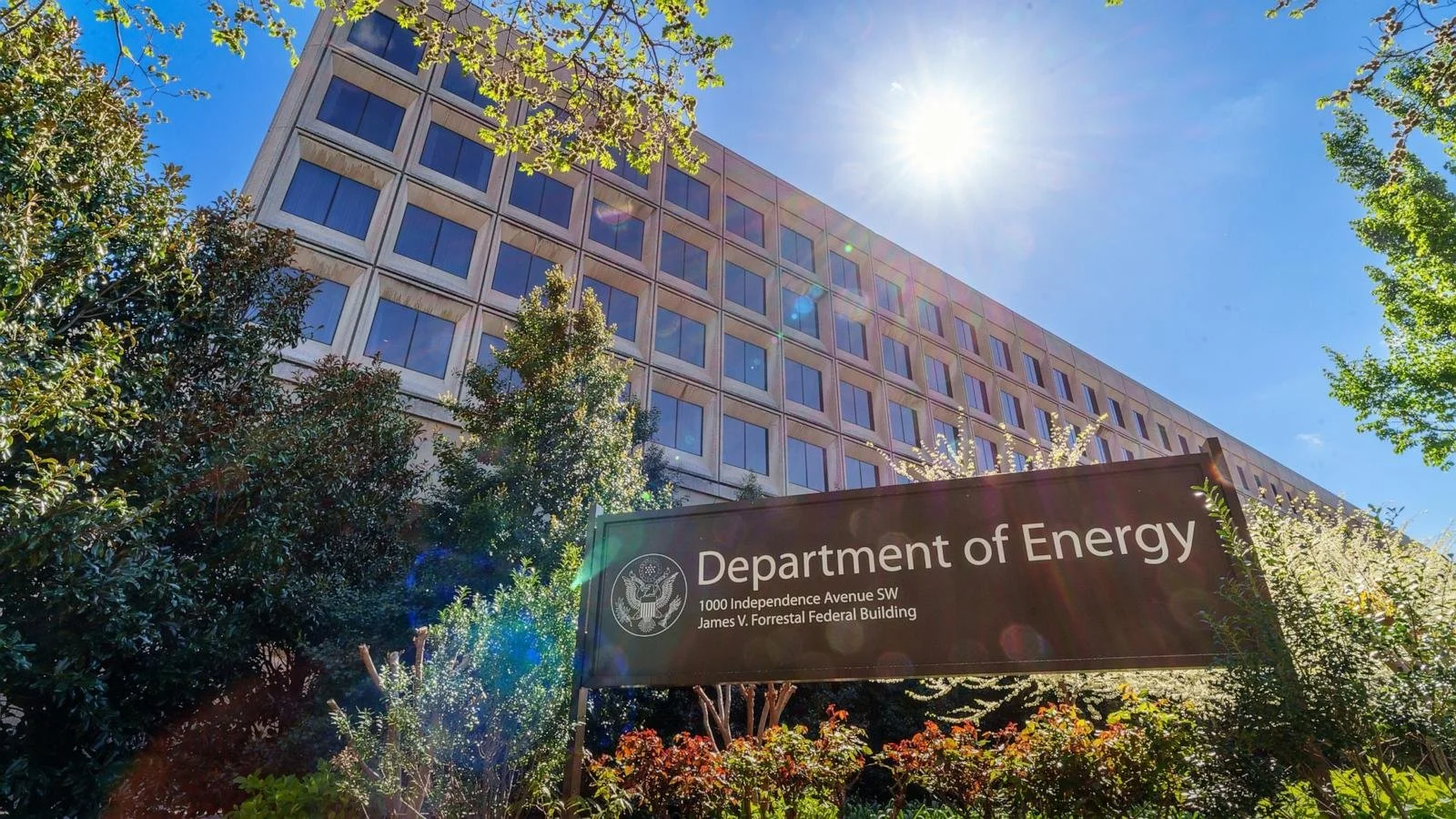
The Department of Energy’s new Office of Energy Dominance Financing (EDF)--formerly known as the Loan Program’s Office (LPO)– is uniquely positioned to deliver on this mandate. With a proven track record of financing first-of-a-kind commercial projects and catalyzing billions in private capital, EDF stands as a critical tool for overcoming the barriers that have long impeded America’s full energy potential—high capital intensity, lengthy development timelines, regulatory friction, and foreign competition.
The Trump Administration has identified four priority objectives that form the backbone of its Energy Dominance agenda:
Expanding nuclear energy to ensure baseload capacity and global leadership.
Strengthening grid reliability and security to defend against physical and cyber threats.
Reducing dependence on foreign critical minerals to secure the foundation of the modern energy economy.
Maintaining U.S. leadership in the global artificial intelligence (AI) race, which is dependent on energy infrastructure at scale.
Each of these priorities requires large-scale capital investment, long-term certainty, and decisive government partnership. EDF financing is designed to de-risk these investments, accelerate deployment, and enable the private sector to drive innovation and growth.
By aligning its pipeline with the Administration’s objectives, EDF can play a decisive role in securing America’s energy future and deliver:
Increased U.S. industrial competitiveness
Enhanced national and economic security
Creation of enduring economic and environmental spillover benefits
Reinforcement of American leadership in global energy markets for decades to come
Energy Dominance as the Guiding Policy Framework
The Trump Administration’s Energy Dominance vision is reflected in a series of executive and departmental actions that collectively form the policy framework for federal energy investment:
Executive Order 14156 – Unleashing American Energy (Jan. 2025): Declared a national energy emergency and directed agencies to maximize domestic production, streamline permitting, and prioritize abundance.
Executive Order 14241 – Immediate Measures to Increase American Mineral Production (Mar. 2025): Declared domestic mineral production a national security priority, delegated Defense Production Act (DPA) authorities to the Departments of Defense and Energy, and authorized permitting acceleration to strengthen supply chains.
Executive Order 14262 – Strengthening the Reliability and Security of the U.S. Electric Grid (Apr. 2025): Elevated grid reliability and resilience as a national priority in light of surging demand from artificial intelligence (AI) data centers and re-shored manufacturing. The order directs the Department of Energy (DOE) to streamline emergency orders under the Federal Power Act, establish a uniform reserve margin methodology, and retain generation resources critical to system reliability.
Nuclear Executive Orders (May 2025): A coordinated package of four directives to quadruple U.S. nuclear capacity to 400 GW by 2050, streamline licensing, empower DOE to fast-track test reactors, deploy advanced nuclear at military and DOE sites (including AI data centers designated as “critical defense facilities”), expand domestic fuel cycle capacity, and direct DOE’s Loan Programs Office to prioritize financing for nuclear restarts, uprates, and new builds.
DOE Secretarial Order (Wright, 2025): Directs DOE programs, including the Loan Programs Office (LPO), to align R&D and financing with the energy dominance agenda, with particular emphasis on nuclear modernization, fossil energy innovation, critical mineral production, and grid resilience.
Together, these actions establish energy dominance not as an aspirational concept but as a binding framework for federal decision-making. The federal government, however, must work in tandem with the private sector, recognizing each party's unique capabilities while not overstepping their respective roles.
This coordination is critically needed in the current environment. One where the utility industry and its supply chain are under increased pressure to respond to demand from AI, increased domestic manufacturing, and other requirements that are straining the electric grid while operating in a capital-intensive, complex regulatory environment. Layered on top is an aggressive strategy by China to become the global leader in energy and computing, driven by massive industrial policy and market manipulation to stifle competition. Meeting these challenges and the administration's policy objectives will require technical innovation, such as small modular nuclear reactors or geothermal energy, or the restart of nascent industry sectors, such as critical minerals, which face significant technical, financial, or market hurdles.
Within this framework, EDF can serve as a critical policy tool – providing large-scale, flexible credit support to overcome the capital intensity, technology risk, and lengthy and burdensome permitting timelines that often deter private-sector investment. By aligning its pipeline with these executive directives, EDF can accelerate project deployment to meet the Administration’s objectives and enhance America’s posture as a global leader in energy innovation.
From Innovation to Infrastructure: EDF Authorities After OBBBA
EDF’s original loan and loan guarantee authority was established in the Energy Policy Act of 2005, and every major piece of energy legislation in recent history has expanded and reformed it, including the One Big Beautiful Bill (OBBB). The OBBB established the 1706 Energy Dominance Financing Program, a new flagship authority explicitly designed to advance the Administration’s energy dominance agenda.
The new 1706 Energy Dominance Financing Program was created with expansive statutory authority to finance projects that expand the capacity, efficiency, resilience, and security of U.S. energy infrastructure. The new 1706 program explicitly ties project eligibility to the Administration’s policy priorities. Projects may include modernizing existing infrastructure, deploying advanced nuclear and fossil technologies, facilities to support domestic critical mineral supply chains, and constructing firm power infrastructure to secure AI data centers and other energy-intensive applications. By providing a broader statutory definition of “energy infrastructure”, Congress and the Administration have given EDF the flexibility to support both traditional energy systems and emerging technologies central to U.S. competitiveness. This authority now serves as the centerpiece of EDF’s role in the current policy landscape. Additional EDF programs, including Title 1703, which finances first-of-a-kind projects; the Advanced Technology Vehicles Manufacturing Program, which supports direct loans for advanced vehicle and component manufacturing; and the State Energy Financing Institution (SEFI), a statutory authority that predated OBBBA, all remain in place. Program utilization is available, subject to congressional appropriations and staff.
In addition to statutory loan authorities, several complementary tools reinforce EDF’s role. DOE’s July 2025 interim final rule revising its NEPA procedures, combined with the Council on Environmental Quality’s (CEQ) rescission of the 2023 NEPA regulations, is intended to accelerate environmental reviews and shorten permitting timelines, which are required for EDF loans and loan guarantees.
Turning Directives into Deals: EDF’s Alignment with Key Priorities
The following discussions illustrate how EDF programs can be applied to provide long-term financing to projects that support Administration objectives but are too large or complex for conventional lenders alone. EDF can reduce risk and ultimately attract private capital that expedites projects and new technologies from concept to construction.
Powering America’s AI Buildout
Artificial intelligence is driving the fastest surge in electricity demand in generations. Data centers already account for a meaningful share of U.S. load growth, and their appetite for dense, always-on power is only accelerating. The Administration has framed this as a national security priority, with AI energy infrastructure ranked alongside semiconductor fabs and critical defense installations as essential to America’s technological edge and outcompeting China. Meeting this demand requires new, large-scale, dispatchable power resources – built quickly and sited near where the load is concentrated. Traditional project finance, however, struggles to keep pace with the scale, speed, and regulatory complexity of these builds.
While many regulatory reforms are necessary to increase speed to power, EDF can help close this gap. Under Title XVII, the office can extend long-term, low-cost financing to commercial-scale generation and transmission projects that provide reliable capacity for data centers and their host communities. This could mean dispatchable natural gas or nuclear generation, new transmission links into constrained markets, or other commercially mature assets that directly serve high-density loads. While EDF should not overstep the role of the private sector by absorbing risks that private lenders cannot, EDF can ensure that strategic power projects can move forward at the speed America’s AI leadership demands.
Advanced Nuclear Energy
Nuclear energy is at the center of the Administration’s energy dominance strategy, with four executive orders issued in May 2025 underscoring its role in national security, industrial competitiveness, and grid reliability. EDF is uniquely positioned to accelerate this agenda. EDF has the most recent and relevant experience financing nuclear projects in the United States, having supported the construction of Vogtle Units 3 and 4 in Georgia—the first new nuclear reactors built in the U.S. in more than 30 years. That loan guarantee, totaling $12 billion, enabled the first deployment of the AP1000 Generation III+ reactor design, supported tens of thousands of jobs, and demonstrated the office’s ability to manage complex nuclear financing at scale.
Today, the case for nuclear power extends beyond carbon-free power. Advanced reactors, including small modular and microreactors, and uprates to existing fleets are tied directly to energy security priorities: powering AI data centers, supplying resilient electricity to defense facilities, and reducing reliance on foreign suppliers of nuclear technology. Private capital alone is unlikely to finance these “first-mover” projects, which carry technical and regulatory risk even when commercially promising. EDF can bridge that gap, ensuring early projects reach financial close and positioning the U.S. as a global leader in the next generation of nuclear technologies.
Securing Critical Minerals
The Administration has made domestic mineral production a national security priority, emphasizing the need to reduce reliance on foreign adversaries, particularly China, for the materials that underpin energy infrastructure, defense systems, and advanced technologies. President Trump’s March 2025 executive order declared a national energy emergency and delegated Defense Production Act authorities to accelerate mining, processing, and associated product development within the United States. These actions, coupled with the creation of the National Energy Dominance Council, position critical minerals alongside oil, gas, and nuclear energy as strategic assets central to U.S. economic and geopolitical strength. At the same time, China continues to dominate global supply chains for lithium, graphite, rare earths, and other minerals, creating a strategic vulnerability the Administration is determined to correct.
EDF can help close this gap. Mining and processing projects face high upfront capital costs, long development timelines, and volatile global pricing—often undercut by China flooding the market. Permitting reform can help alleviate these challenges, where the U.S. lags far behind other industrialized countries in permitting new mining operations. Even so, potential delays and other factors can deter conventional lenders. EDF’s long-term financing can better assess and absorb these risks and support commercially ready projects that produce lithium, graphite, nickel, cobalt, rare earths, and other critical inputs, catalyzing private investment and accelerating the buildout of secure domestic supply chains. This not only safeguards national security but also ensures that U.S. energy and manufacturing projects – whether new reactors, AI data centers, batteries, or fuel production hubs — have reliable access to the materials needed to move forward at scale.
Geothermal and Long-Duration Storage
Energy dominance rests on the ability to deliver electricity that is reliable, affordable, and available on demand. While conventional generation remains central, the Administration has also recognized the value of “clean, firm” resources that can reinforce grid stability in ways variable resources cannot. Geothermal energy, long overlooked, offers baseload potential around the clock in regions with favorable geology. Long-duration energy storage, by contrast, functions less as a generation source than as a strategic reliability tool – able to discharge for many hours, stabilize the grid during disruptions, and provide secure backup for AI data centers, defense installations, and industrial users. Together, these technologies exemplify the type of projects that can harden America’s energy backbone.
EDF can play a catalytic role in scaling both. For geothermal, loan guarantees can help startups and proven developers move from successful exploration into commercial-scale plants, absorbing the capital costs of wellfield buildout and power plant construction. For storage, EDF can support the large-scale manufacturing and deployment of stand-alone or distributed systems, provided they are commercially ready and financeable. In both cases, the office offers flexible, long-term debt that enables projects to clear the financing gap and reach scale. By backing firm power assets, EDF helps ensure the grid remains stable enough to sustain America’s digital and industrial future.
Policy and Program Recommendations
While EDF’s existing authorities align closely with the Administration’s energy dominance agenda, several programmatic and legislative adjustments would enable the office to deliver results more quickly and with greater impact. The following recommendations focus on operational improvements, interagency coordination, targeted outreach, and increased flexibility of existing authorities.
1. Maintain Steady Funding and Staffing
Successfully delivering on expanded authorities will require adequate resourcing and especially staffing. EDF should prioritize professional staff – particularly in areas such as mining, fuels, and advanced manufacturing – to enable it to fulfill its mission and deliver on its expanded authorities. The President’s Budget Request sought sustained funding for credit subsidy and administrative costs, particularly to support critical administration priorities. This will allow them to move quickly and avoid bottlenecks. Staffing and program stability will enhance recruitment and staffing efforts.
2. Define Pathways to Fast-Track Processing for Commercially Ready Projects
EDF should establish clearer pathways for expedited review of commercially ready projects. This can be especially helpful for early-stage companies that have previously utilized venture capital and other equity and are less experienced with the requirements of secured debt and project finance. Other government loan programs, such as those offered by the U.S. Export-Import Bank (EXIM) and USDA, provide templates for more effective intake. Projects meeting these requirements can then be streamlined through due diligence and approval to ensure financing keeps pace with urgent national security and infrastructure needs.
3. Enhance Cross-Agency Coordination
Closer collaboration with the Department of Defense (DOD), the Defense Production Act (DPA) office, the Office of Strategic Capital (OSC), and the U.S. International Development Finance Corporation (DFC) and EXIM would enable the identification of where EDF authorities can be best applied on projects that it is uniquely qualified and resourced for, and guide applicants. This approach increases efficiency across the Federal government, strengthens critical mineral supply chains, bolsters domestic manufacturing, and ensures federal resources contribute to a unified national strategy.
4. Keep Open to Alternative Technology Sectors
EDF could proactively engage technologies that might be underrepresented in its pipeline but critical to energy dominance, such as geothermal, long-duration energy storage, and nuclear energy. Targeted outreach could include attending technology-specific webinars and conferences to build awareness of eligibility pathways and help diversify the portfolio in ways that advance resilience and security. Historically, DOE issued notice of funding opportunities (NOFO) indicating areas of interest.
5. Modify and Evolve the Federal Support Restrictions
As detailed in the EDF issued guidance and rules, DOE may not be able to issue loans to projects that use certain appropriated funds that will, directly or indirectly, benefit from other forms of federal support (“Federal Support Restriction”). This can also be referred to as “double-dipping”. Examples of such federal support include grants or other loan guarantees from federal agencies or entities, including DOE, federal agencies or entities as a customer or off-taker of the Project’s products or services, or other federal contracts, including acquisitions, leases, and other arrangements, that support the Project.[1] For instance, an SMR company receiving a loan guarantee may not be able to use the nuclear fuel that benefitted from DOE-funded efforts to reshore the nuclear fuel supply chain – even though the fuel is necessary for the SMR to be operational. Even in cases where other federal support may not be statutorily restricted, under federal budgeting practices, typically governed by the Federal Credit Reform Act (FCRA), the credit subsidy cost of a project with federal support will be significantly higher. This would consume a greater share of credit subsidy appropriations and ultimately limit EDF loan capacity. Modifying these direct and indirect limitations on federal support should be a high priority to ensure DOE can fully utilize EDF authority.
Taken together, these steps would allow EDF to move at the speed and scale the Administration’s energy dominance agenda requires. By streamlining internal processes, deepening interagency coordination, and expanding its reach into priority sectors, EDF can ensure that strategic projects secure financing on timelines that match the urgency of national security and industrial competitiveness goals.
Conclusion
The Administration’s energy dominance agenda rests on a simple truth: without the right financing tools, even the strongest policy signals cannot deliver results. The Department of Energy’s Loan Programs Office, retooled after OBBB, has emerged as the central financing lever for translating presidential directives into real projects. With its broadened authority under Section 1706 and residual capacity under Section 1703, EDF is uniquely positioned to de-risk investment, mobilize private capital, and accelerate the construction of strategic energy infrastructure at scale.
The imperative now is speed. Rapid implementation of the 1706 Energy Dominance Financing program – paired with targeted use of remaining 1703 authority – will allow the Administration to deliver projects that harden the grid, secure critical minerals, expand nuclear and firm power, and meet surging demand from AI and other national security applications. By doing so, EDF can reinforce U.S. energy security, strengthen economic resilience, and ensure continued technological leadership in an increasingly competitive global environment.
[1] Some exceptions have been allowed for in recent legislation, including Federal income tax benefits, siting on federal land, etc.